Why temperature matters when comparing pressure readings
Check whether readings are comparable when ambient conditions, temperature or the connected volume may have changed.
HVAC Leak Check editorial team · References checked
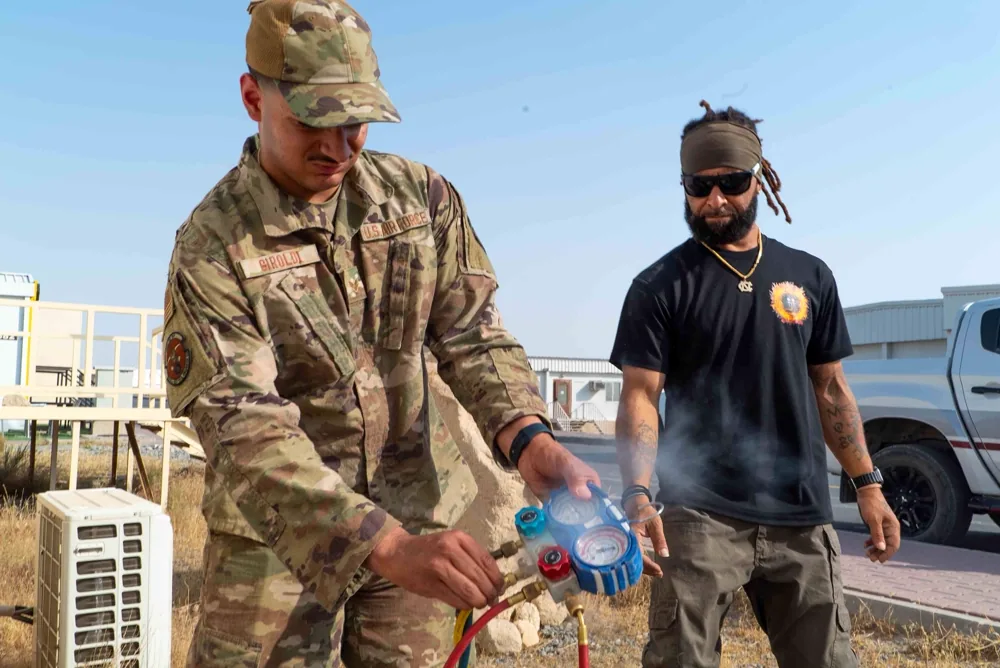
A manifold and hoses require their own documented measurement reference.Photo: U.S. Air Force photo by Senior Airman Mark Colmenares · Public domain
Two pressure readings need context before the difference can be interpreted. In a fixed volume with the same amount of gas, absolute pressure can change as the gas temperature changes. An outdoor unit, pipework and the measuring instrument may change temperature at different rates. Two readings taken before and after direct sunshine are not necessarily comparable evidence.
Capture more than the display value
Record the measurement point, instrument, unit and pressure reference as well as the two times. Keep the equipment state and connected volume alongside them. Record relevant temperatures if the method specifies them and what they were measuring: for example, shade air temperature is different from line surface temperature, and neither is automatically the temperature throughout an isolated volume.
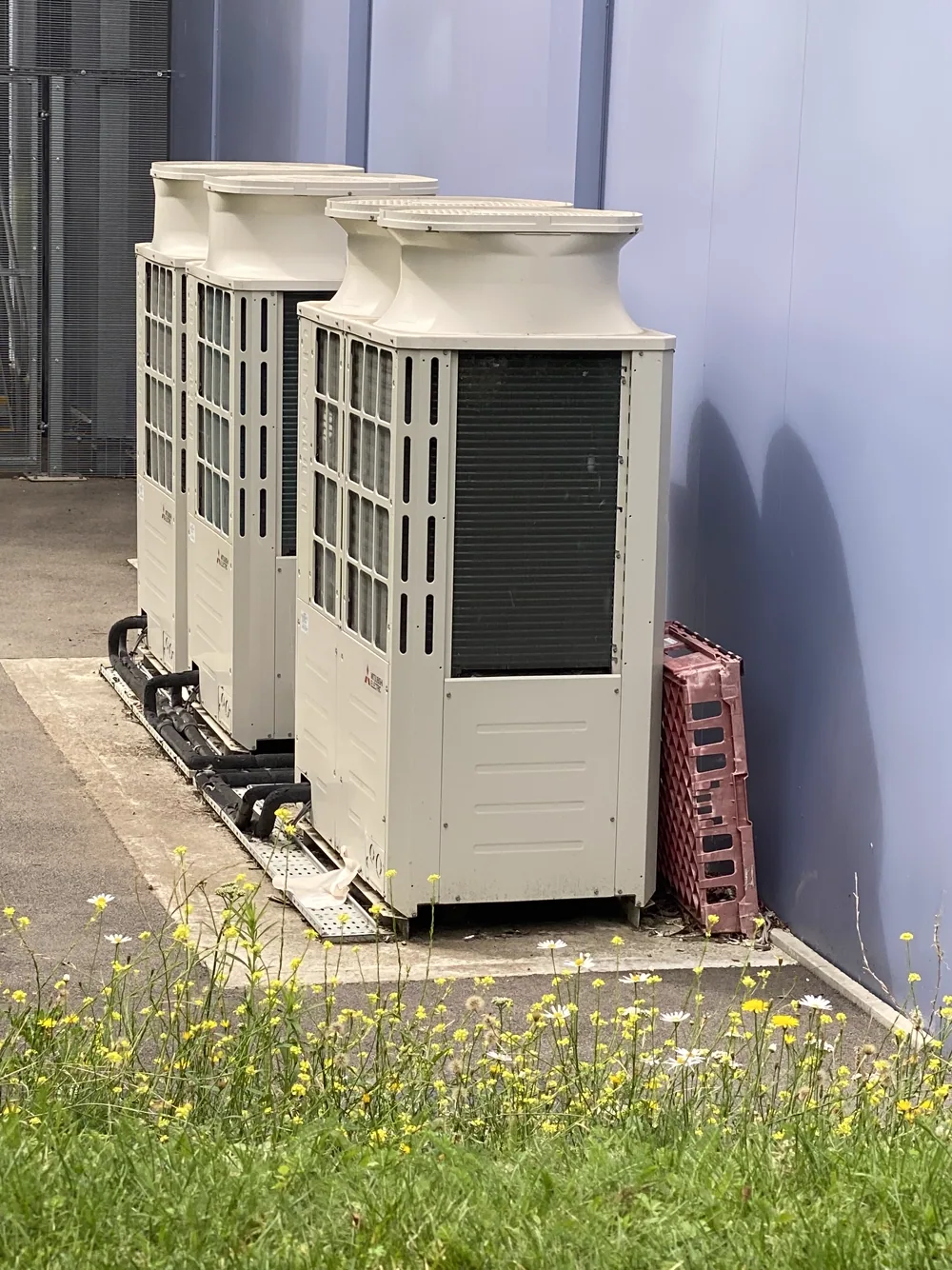
Use the actual unit label and the corresponding record when booking service.Photo: Secretlondon · CC BY-SA 4.0
Do not infer a correction from two temperatures
A simple ideal-gas relationship uses absolute pressure and thermodynamic temperature and assumes fixed mass and volume. It cannot account for a changed test boundary, an unknown gas temperature or a refrigerant that may change phase. A useful report names the manufacturer’s method or the site’s agreed procedure and leaves an open question when the necessary observations are missing.
When the difference is only bar versus psi, convert the units while keeping the same pressure reference and original values in the job sheet.
Common questions
Is a pressure difference enough to locate a leak?
No. A change can prompt further investigation; interpretation depends on the procedure, conditions and what the measurement could observe.
What should I record alongside cold-morning and warm-afternoon pressure readings?
Record the time, pressure and reference, instrument, measured section, temperature sensor location and relevant conditions such as direct sun. Note any difference in the connected equipment.
How do I label shade temperature and a measured pipe surface temperature so they are not confused?
Use explicit names such as “shaded ambient air” and “pipe surface at the service side”. Include where each sensor was placed and when it was read. Do not substitute either for gas temperature without justification.
Can I adjust two pressure readings for temperature if I do not know the gas temperature?
Keep the readings and conditions as observations. A correction needs defensible gas temperature and pressure references, and evidence the assumption about the volume and the contents holds.